Should a 25 year old furnace be replaced?
September
22, 2026Should a 25 year old furnace be replaced?
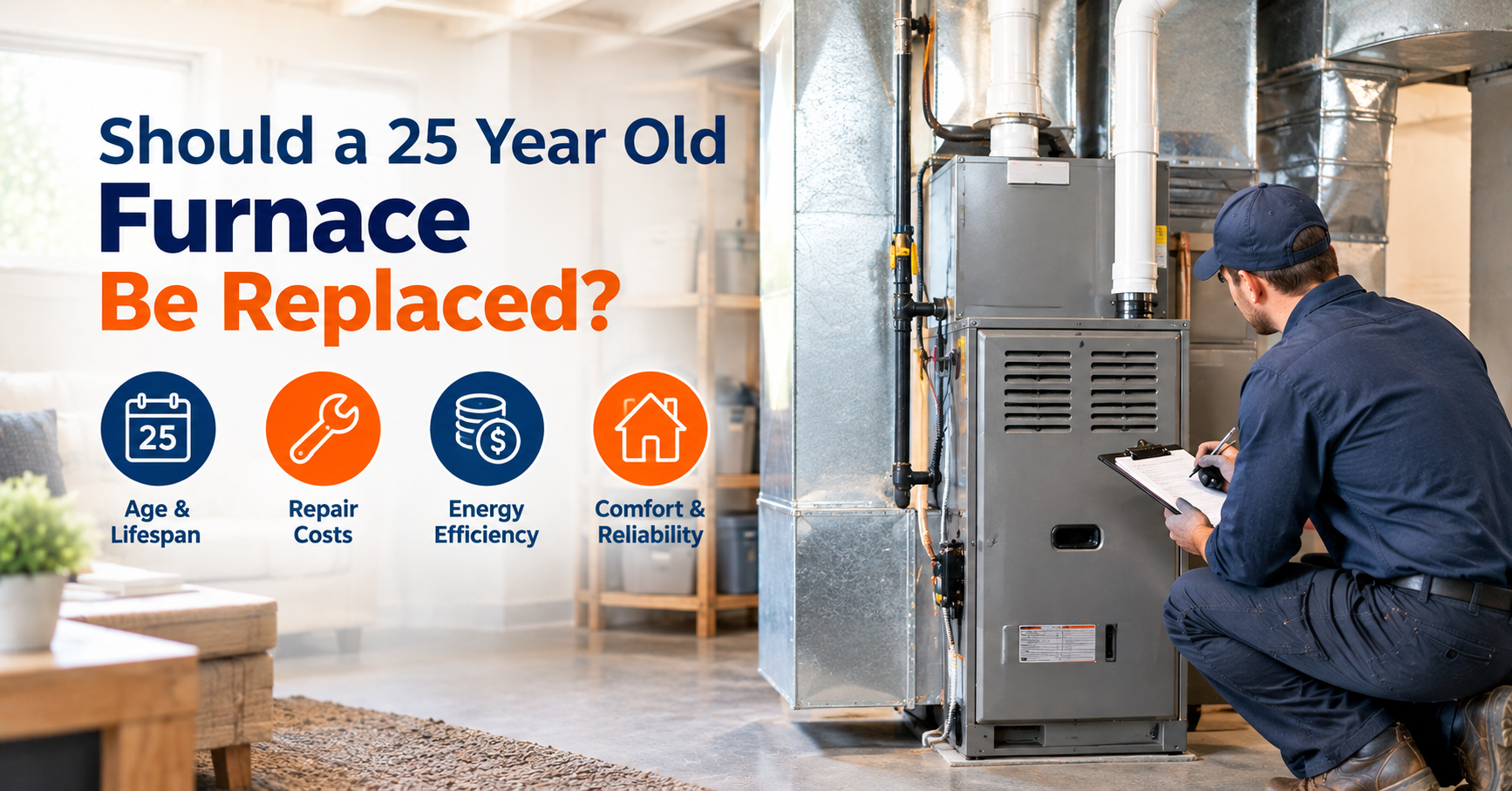
Should a 25 Year Old Furnace Be Replaced?
A furnace can last for many years with proper maintenance, but eventually every heating system reaches a point where keeping it running may no longer make financial or practical sense. If your furnace is 25 years old, you may be asking whether it is worth repairing or whether it is finally time for a replacement.
The short answer is that a 25-year-old furnace does not automatically have to be replaced simply because of its age. However, it is well beyond the typical service life of most residential furnaces. Many gas furnaces are designed to provide around 15 to 20 years of service, although some well-maintained systems can continue operating longer.
For homeowners in Langley, BC, the condition, efficiency, repair history and safety of the furnace should all be considered before making the decision.
How Long Does a Furnace Usually Last?
The lifespan of a furnace depends on its quality, installation, maintenance, operating conditions and how heavily it has been used.
A properly maintained furnace can sometimes operate beyond 20 years. However, once a furnace reaches the 20-year mark, homeowners should start planning for eventual replacement rather than assuming it will continue operating indefinitely. Carrier notes that most furnaces typically provide around 15–20 years of reliable operation.
At 25 years, your furnace is already considerably older than the typical lifespan.
That does not necessarily mean it will stop working tomorrow. It does mean that the chances of age-related repairs, declining efficiency and unexpected breakdowns become more important factors.
Signs Your 25-Year-Old Furnace May Need Replacement
Age is only one part of the decision. Your furnace may give you several other warning signs.
Frequent Furnace Repairs
If you have started calling a technician repeatedly during the heating season, those repair bills can add up quickly.
An occasional inexpensive repair may not be a problem. But if major components such as the blower motor, control board or heat exchanger are failing, it may be worth comparing the repair cost with the price of a replacement furnace.
Rising Heating Bills
Have your heating bills increased even though your household’s heating habits have not changed?
An older furnace may not operate as efficiently as a newer high-efficiency model. Natural Resources Canada recommends looking at energy efficiency when replacing heating equipment and notes that ENERGY STAR-certified gas furnaces use less energy on average than standard models.
Uneven Heating Around Your Home
Cold rooms, inconsistent temperatures and a furnace that runs for long periods can indicate that the heating system is struggling.
Of course, these problems can also come from ductwork, insulation, thermostat problems or airflow restrictions. A professional inspection can help determine whether the furnace itself is responsible.
Strange Sounds or Unusual Odours
Banging, rattling, squealing or other new noises should not simply be ignored.
Similarly, unusual smells, soot or signs of corrosion deserve professional attention. These symptoms can sometimes indicate a mechanical or combustion-related problem.
Is It Worth Repairing a 25-Year-Old Furnace?
Sometimes, yes.
If the furnace is still operating safely and the problem is a relatively inexpensive component, repairing it may make sense. A well-maintained older furnace can sometimes continue providing heat for several more seasons.
The bigger question is what happens after that repair.
If you spend money replacing one major component today and another expensive component fails next winter, your total repair costs can become difficult to justify.
This is why it is useful to ask your HVAC professional about the overall condition of the furnace, not just the specific part that has failed.
Why Replacing a 25-Year-Old Furnace Can Make Sense
Better Energy Efficiency
Modern furnaces can offer substantially improved efficiency compared with many older systems.
Furnace efficiency is commonly expressed using an AFUE (Annual Fuel Utilization Efficiency) rating. The higher the AFUE rating, the more efficiently the furnace converts fuel into usable heat.
A new high-efficiency furnace may therefore use less fuel to provide the same amount of heating, although your actual savings will depend on the furnace selected, your home’s insulation, thermostat settings, energy prices and other factors.
More Reliable Heating
Replacing an aging furnace before it fails completely can also reduce the chance of being left without heat during cold weather.
Instead of making a rushed decision after an emergency breakdown, you have time to compare furnace models, installation quotes and warranty options.
Improved Comfort
Newer systems can offer features such as variable-speed blower motors and staged or modulating operation. These technologies can help improve airflow and temperature consistency when properly matched to the home. Natural Resources Canada also notes the benefits of staged and modulating systems for efficient operation at lower firing rates.
Does a 25-Year-Old Furnace Need to Be Replaced Immediately?
Not necessarily.
There is no universal rule saying every 25-year-old furnace must be removed immediately. A professional should evaluate the equipment before you make the final decision.
However, if your furnace is 25 years old and you are experiencing frequent repairs, rising heating costs, inconsistent temperatures, unusual noises or safety concerns, replacement deserves serious consideration.
If the system is currently working well, you can still have it inspected and start researching replacement options before an emergency occurs.
What Should You Consider When Replacing Your Furnace?
Don’t choose a new furnace based solely on the price of the equipment.
Get the Furnace Properly Sized
A furnace that is too large or too small for your home can affect comfort and efficiency. Natural Resources Canada recommends getting multiple quotes and having the contractor calculate the home’s heating requirements before purchasing a new furnace.
Compare Efficiency Ratings
Ask about the furnace’s AFUE rating and how it compares with the existing system.
Check Installation Requirements
A furnace replacement may involve changes to venting, gas connections, electrical components, ductwork or other parts of the heating system. The condition of your existing setup can affect the total installation cost.
Ask About Maintenance
Even a new furnace needs regular care. Natural Resources Canada recommends regular servicing and replacing or cleaning filters according to the manufacturer’s instructions.
Furnace Replacement in Langley, BC
If you have a 25-year-old furnace in Langley, now is a good time to have the system professionally evaluated.
You may be able to keep an older furnace running with proper maintenance and repairs. On the other hand, if efficiency has declined or major repairs are becoming necessary, investing in a new furnace could provide more dependable heating and potentially lower energy consumption.
Langley Home Plumbing can help homeowners evaluate their heating and HVAC needs and determine whether furnace repair or replacement is appropriate for their home.
The goal should not simply be to replace a furnace because it has reached a certain birthday. Instead, look at age, safety, efficiency, repair history and overall performance together.
If your furnace has been keeping your Langley home warm for 25 years, it has already provided a long service life. Getting a professional assessment now can help you decide whether to keep repairing it or plan for a replacement before the next major breakdown.
Frequently Asked Questions
Can a furnace last 25 years?
Yes. Some furnaces can operate for 25 years or longer, particularly when they have been properly installed and maintained. However, 25 years is beyond the typical 15–20-year lifespan commonly cited for residential furnaces.
Should I replace a 25-year-old furnace if it still works?
Not automatically. If it is operating safely and reliably, an inspection can help determine whether continued operation is reasonable. However, its age makes it sensible to start planning for replacement.
How often should a furnace be serviced?
Natural Resources Canada recommends that natural gas and propane furnaces be serviced at least every two years, while homeowners should also keep filters clean or replace them according to the manufacturer’s recommendations.
Is a new furnace more efficient than a 25-year-old furnace?
It can be, particularly when replacing an older, less-efficient model with a modern high-efficiency furnace. The actual energy savings depend on the old and new equipment, home efficiency, usage and energy prices.

Recent Comments