Is an expansion tank required for a water heater in BC?
October
19, 2026Is an expansion tank required for a water heater in BC?
If you are installing a new hot water tank or replacing an older water heater, your plumber may recommend adding a thermal expansion tank. For homeowners in Langley, BC, this can raise an important question: is an expansion tank actually required, or is it an optional extra?
The answer depends on your home’s plumbing system. An expansion tank is not automatically required for every water heater in British Columbia. However, thermal expansion protection is required in certain closed plumbing systems under the BC Plumbing Code, and a properly sized expansion tank is one way to provide that protection.
In this guide, Langley Home Plumbing explains how expansion tanks work, when they may be necessary, the warning signs of excessive water pressure, and why professional installation matters.
What Is a Water Heater Expansion Tank?
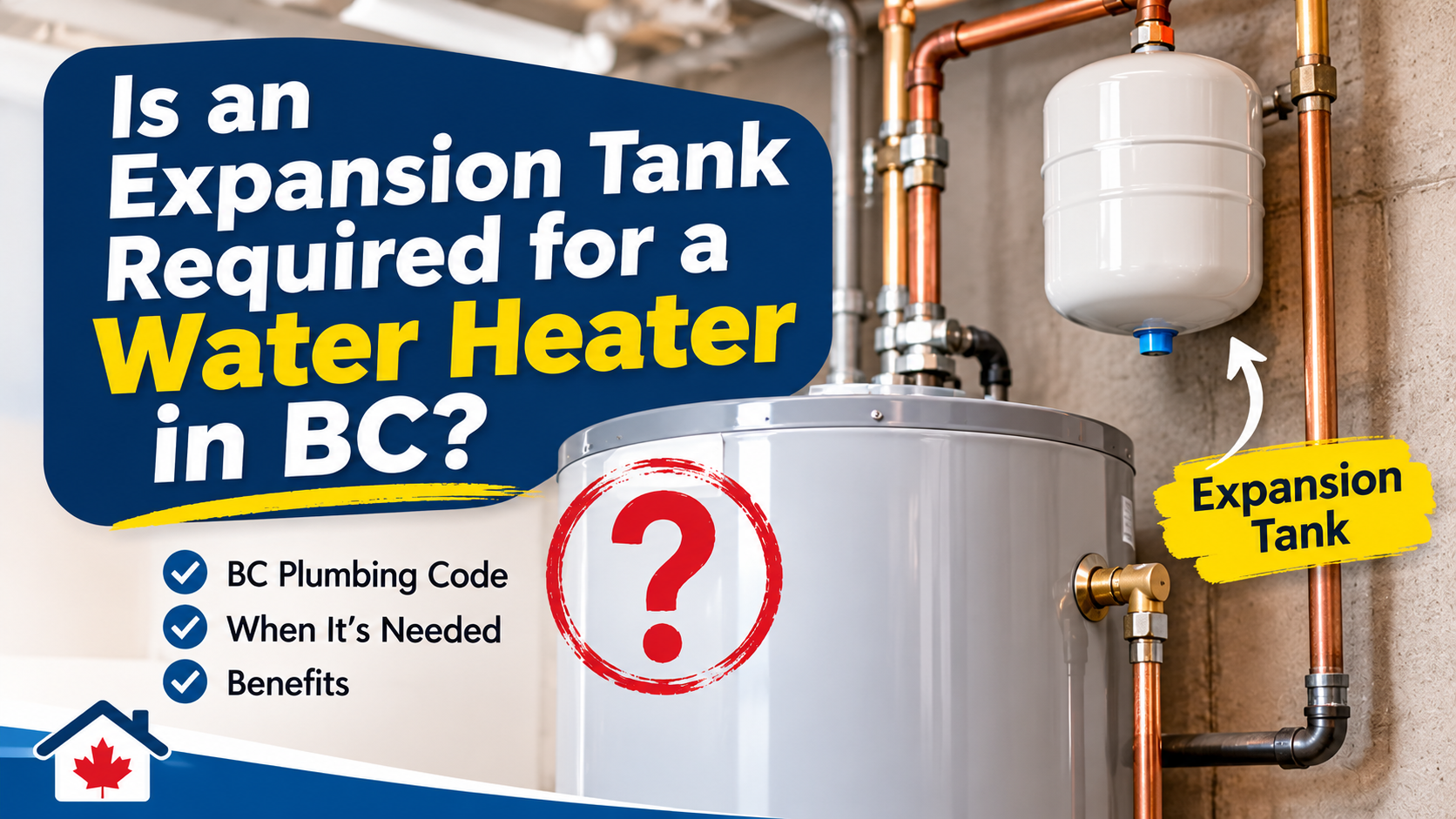
A thermal expansion tank is a small pressure-rated tank connected to the cold-water supply serving your hot water heater. It is designed to accommodate the extra volume created when water heats up.
Water expands as its temperature increases. In a plumbing system that allows water to flow back toward the municipal supply, some of that expansion may be accommodated by the wider system. However, a closed plumbing system restricts that movement.
Without suitable protection, the expanding water can increase pressure inside the plumbing system. An expansion tank provides space for some of this extra volume, helping control pressure fluctuations.
Inside a typical expansion tank is a flexible diaphragm that separates the water from a pre-charged air chamber. As water pressure increases, the diaphragm moves and compresses the air, allowing the tank to accommodate thermal expansion.
Is an Expansion Tank Required by the BC Plumbing Code?
The BC Plumbing Code addresses thermal expansion in Article 2.6.1.11. Protection against thermal expansion is required when specified conditions involving check valves, backflow preventers, or pressure-reducing valves apply.
The code’s explanatory guidance identifies several acceptable ways to accommodate thermal expansion, including:
- A suitably sized diaphragm expansion tank designed for potable water.
- An appropriate auxiliary thermal expansion relief valve.
- Another method accepted by the authority having jurisdiction.
Therefore, an expansion tank is not the only permitted solution, but suitable thermal expansion protection must be provided where the code requires it. The exact requirements depend on the plumbing configuration and applicable code provisions. Source: BC Plumbing Code, Article 2.6.1.11.
For homeowners in Langley, a qualified plumber can assess the existing system and determine whether an expansion tank or another approved method is appropriate.
When Is an Expansion Tank Needed?
Several common plumbing components can create or contribute to a closed water distribution system.
1. Your Home Has a Pressure-Reducing Valve
A pressure-reducing valve lowers incoming municipal water pressure to a suitable level for the home’s plumbing. Depending on the installation, it can also prevent expanded water from flowing back toward the supply.
When the system is closed in this way, thermal expansion protection may be required.
2. Your Plumbing System Has a Check Valve
A check valve allows water to flow in one direction while restricting reverse flow. If your system includes a check valve that creates a closed arrangement, pressure from heated water may have nowhere to go.
An appropriately sized expansion tank can help accommodate this increase in pressure.
3. A Backflow Preventer Is Installed
Backflow prevention devices protect the public water supply from contamination. Depending on the device and plumbing configuration, they can restrict reverse water flow.
If a backflow preventer creates a closed water distribution system, suitable thermal expansion protection may be necessary.
A plumber should assess the complete installation rather than assuming that every home with a particular component requires the same solution.
What Happens If Thermal Expansion Is Not Controlled?
When water heats up in a closed system, pressure can rise beyond normal operating levels. Over time, repeated pressure fluctuations may place additional stress on plumbing components.
Potential warning signs include:
- Water dripping from the temperature and pressure relief valve.
- Noticeable changes in water pressure.
- Leaks around plumbing connections.
- Repeated discharge from a relief valve.
These symptoms can have other causes, including excessive incoming water pressure, a faulty relief valve, or an incorrectly configured system. They should not automatically be attributed to a missing expansion tank.
If you notice water leaking from your hot water tank or its relief valve, arrange a professional inspection. Never cap, plug, or obstruct a temperature and pressure relief valve, as it is an important safety device.
How Is a Water Heater Expansion Tank Installed?
An expansion tank is generally installed on the cold-water supply serving the water heater, downstream of any valve or device that closes the system to reverse flow. Its location and connection must follow the applicable plumbing requirements and the manufacturer’s instructions.
A professional installation typically involves assessing the plumbing system, checking water pressure, selecting an appropriately sized tank, and confirming the tank’s air pre-charge is suitable for the system’s operating pressure.
The plumber will also check the connections and verify that the installation does not interfere with the water heater’s safety devices.
Correct sizing matters. An undersized or improperly charged tank may not provide the intended protection, while an incorrectly installed tank can introduce additional plumbing problems.
Does Every New Hot Water Tank in Langley Need an Expansion Tank?
No. Replacing a hot water tank does not automatically mean that every home needs a separate expansion tank. The requirement depends on whether the plumbing system needs thermal expansion protection and how that protection is already provided.
However, replacing an old water heater is a sensible opportunity to have the existing plumbing configuration checked. Changes to valves, pressure-reducing equipment, or other components can affect how the system handles thermal expansion.
Homeowners should also confirm applicable permit and inspection requirements with the relevant local authority. The BC Plumbing Code applies across the province, while local authorities determine how code and permit requirements apply to particular projects.
Frequently Asked Questions
How much does it cost to install a water heater expansion tank in BC?
The cost varies depending on the tank size, materials, labour, accessibility, and whether plumbing modifications are needed. Request an itemized quote from a qualified plumber rather than relying on a single price for every installation.
Can I install an expansion tank myself?
Professional installation is recommended because correct sizing, pressure settings, secure connections, and compliance with plumbing requirements are important. Gas and electrical water heater work also requires appropriately qualified professionals.
Does an expansion tank prevent all water heater leaks?
No. An expansion tank helps accommodate thermal expansion in an appropriate system, but it cannot prevent every leak or correct every pressure problem. Regular inspection and proper water heater maintenance remain important.
How do I know whether my home needs one?
A plumber can check for a pressure-reducing valve, check valve, backflow preventer, and other components that affect water flow and pressure. This assessment helps determine whether thermal expansion protection is required and which solution is suitable.
Get Professional Water Heater Advice in Langley, BC
A thermal expansion tank can be an important part of a safe, properly functioning plumbing system, but it is not a universal requirement for every water heater. What matters is whether your home’s plumbing arrangement requires thermal expansion protection and whether an approved solution is already in place.
If you are replacing a hot water tank, experiencing pressure fluctuations, or noticing water around your plumbing connections, consider having the system inspected by an experienced professional.
Langley Home Plumbing helps homeowners in Langley and surrounding communities with plumbing services, including hot water tank installation, replacement, and repairs.
Visit www.langleyhomeplumbing.ca to learn more about available services and request assistance with your home’s hot water system.

Recent Comments