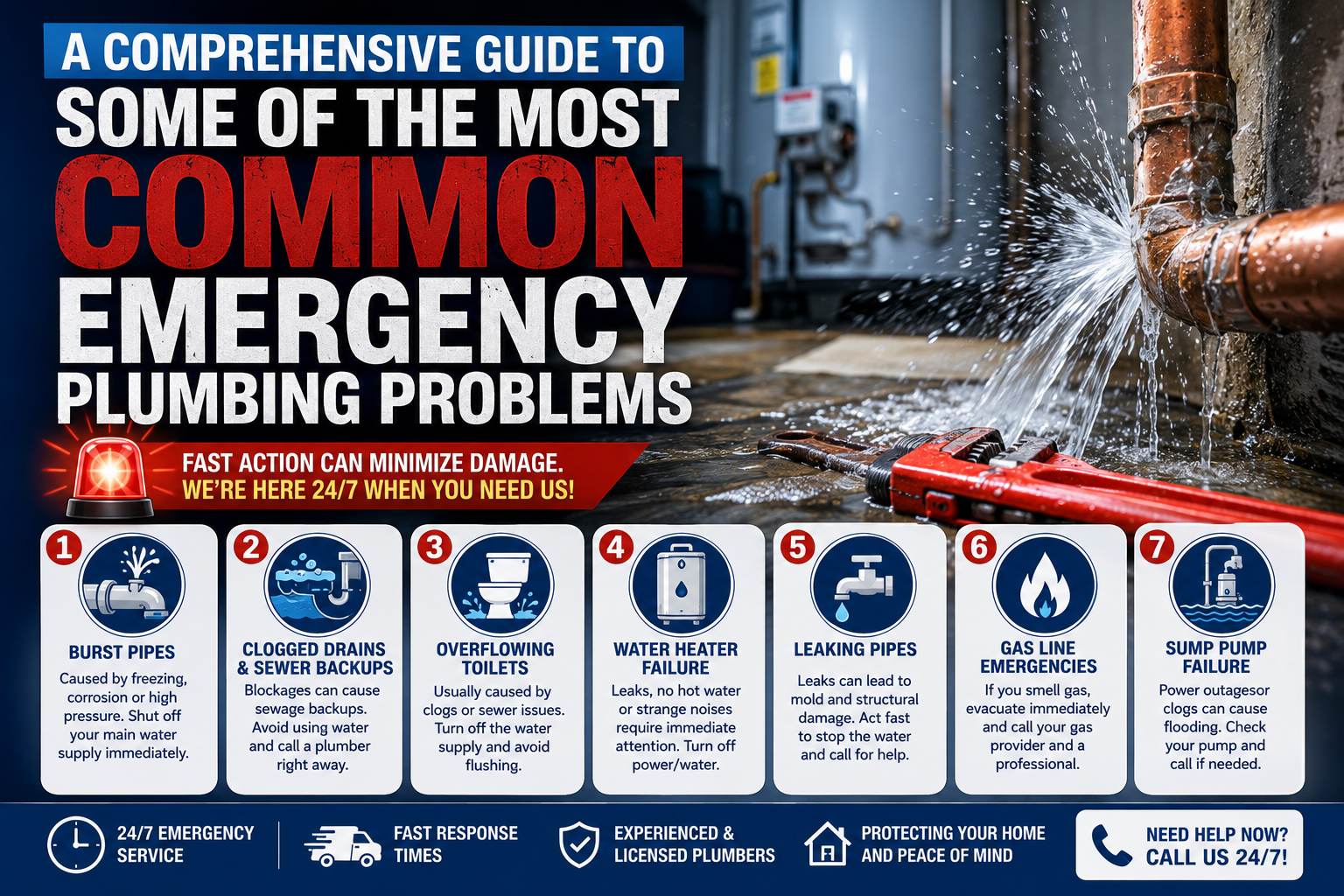
A Comprehensive Guide To Some Of The Most Common Emergency Plumbing Problems
May
15, 2026A Comprehensive Guide To Some Of The Most Common Emergency Plumbing Problems
Plumbing emergencies can happen when you least expect them. A burst pipe in the middle of the night, a backed-up sewer line, or a leaking water heater can quickly cause serious damage to your home if not handled immediately.
Knowing how to identify common emergency plumbing problems—and what steps to take before a professional arrives—can help minimize water damage, reduce repair costs, and protect your property.
At Langley Home Plumbing, we provide fast and reliable emergency plumbing services for homeowners across Langley and surrounding areas. In this guide, we’ll cover some of the most common emergency plumbing problems, their causes, and how to respond effectively.
1. Burst Pipes
Burst pipes are one of the most serious plumbing emergencies homeowners face. Even a small crack can release large amounts of water within minutes.
Common Causes
- Freezing temperatures
- Aging or corroded pipes
- Excessive water pressure
- Poor pipe installation
During winter, frozen water inside pipes expands, increasing pressure and causing pipes to crack or burst.
What To Do Immediately
- Shut off the main water supply
- Turn off electricity near affected areas if necessary
- Drain remaining water by opening faucets
- Move valuables away from water damage
How To Prevent Burst Pipes
- Insulate exposed pipes
- Keep indoor temperatures consistent during winter
- Schedule regular plumbing inspections
Fast action can significantly reduce water damage and repair costs.
2. Clogged Drains and Sewer Backups
A severely clogged drain or sewer backup can quickly become a health hazard and cause extensive property damage.
Common Causes
- Grease buildup
- Hair and soap residue
- Flushing wipes or hygiene products
- Tree root intrusion into sewer lines
Sewer backups often produce foul odors and wastewater overflow.
Warning Signs
- Multiple drains backing up at once
- Gurgling sounds from toilets or sinks
- Slow drains throughout the home
- Sewage odors
What To Do Immediately
- Stop using water fixtures
- Avoid flushing toilets
- Keep children and pets away from contaminated areas
- Contact an emergency plumber immediately
Prevention Tips
- Never pour grease down drains
- Use drain strainers
- Schedule professional drain cleaning regularly
Preventative maintenance is key to avoiding major sewer issues.
3. Overflowing Toilets
An overflowing toilet can quickly flood your bathroom and spread contaminated water.
Common Causes
- Drain blockages
- Sewer line issues
- Faulty float mechanisms
What To Do Immediately
- Turn off the toilet’s water supply valve
- Avoid repeated flushing
- Use towels to contain water spread
- Call a plumber if the clog doesn’t clear
Prevention Tips
- Avoid flushing wipes, paper towels, or hygiene products
- Inspect toilets regularly for performance issues
- Address slow flushing early
Small toilet issues can become emergency situations if ignored.
4. Water Heater Failure
Losing hot water unexpectedly is frustrating, especially during colder months in British Columbia.
Common Emergency Water Heater Problems
- Water leaks
- No hot water
- Strange noises
- Tank corrosion
Common Causes
- Sediment buildup
- Faulty heating elements
- Aging water heaters
- High water pressure
What To Do Immediately
- Shut off power or gas supply to the unit
- Turn off the water supply
- Avoid attempting major repairs yourself
Prevention Tips
- Flush the tank annually
- Schedule routine maintenance
- Replace aging water heaters before failure
Most water heaters last around 8–12 years with proper care.
5. Leaking Pipes
Pipe leaks may seem minor at first but can quickly lead to structural damage, mold growth, and high water bills.
Common Causes
- Pipe corrosion
- Loose fittings
- Freezing temperatures
- Excessive water pressure
Warning Signs
- Water stains on walls or ceilings
- Damp spots or mold growth
- Sudden increases in water bills
- Musty odors
What To Do Immediately
- Shut off the water supply if necessary
- Use temporary pipe repair tape if possible
- Contact a professional plumber quickly
Prevention Tips
- Monitor water pressure
- Insulate pipes during winter
- Inspect exposed plumbing regularly
Even small leaks should never be ignored.
6. Gas Line Plumbing Emergencies
Some plumbing systems also involve gas lines, which can create dangerous situations if damaged.
Warning Signs
- Rotten egg smell
- Hissing sounds near pipes
- Sudden dizziness or nausea indoors
What To Do Immediately
- Leave the property immediately
- Avoid using electrical switches or open flames
- Contact emergency services and a licensed professional
Prevention Tips
- Schedule regular gas line inspections
- Never attempt DIY gas repairs
Gas leaks require immediate professional attention for safety.
7. Sump Pump Failure
Sump pumps protect basements from flooding during heavy rain or snowmelt.
Common Causes
- Power outages
- Clogged discharge pipes
- Mechanical failure
Warning Signs
- Strange noises from the sump pump
- Basement dampness
- Pump running continuously
What To Do Immediately
- Check the power source
- Inspect discharge lines for blockages
- Contact a plumber if flooding begins
Prevention Tips
- Test sump pumps regularly
- Install a battery backup system
- Schedule routine maintenance
A functioning sump pump is essential during storm season.
Why Fast Emergency Plumbing Service Matters
Plumbing emergencies can escalate rapidly. Delaying repairs may lead to:
- Severe water damage
- Mold growth
- Structural issues
- Increased repair costs
Professional emergency plumbers can quickly diagnose problems, stop further damage, and restore your plumbing system safely.
How To Reduce the Risk of Plumbing Emergencies
Preventative maintenance is the best defense against emergency plumbing problems.
Helpful Maintenance Tips:
- Schedule annual plumbing inspections
- Replace aging pipes and fixtures
- Insulate exposed pipes
- Avoid flushing inappropriate items
- Address small leaks immediately
Routine maintenance helps identify issues before they become emergencies.
Why Choose Langley Home Plumbing?
At Langley Home Plumbing, we understand that plumbing emergencies require fast and reliable service.
We provide:
- 24/7 emergency plumbing services
- Leak detection and repair
- Drain cleaning and sewer services
- Water heater repairs
- Pipe replacement and maintenance
Our experienced team is committed to protecting your home and restoring comfort as quickly as possible.
Final Thoughts
Understanding common emergency plumbing problems can help homeowners respond quickly and reduce damage when issues arise.
From burst pipes and overflowing toilets to sewer backups and water heater failures, plumbing emergencies require immediate attention to protect your property and safety.
By practicing preventative maintenance and working with trusted professionals, you can reduce the risk of unexpected plumbing disasters.
If you need emergency plumbing services in Langley or surrounding areas, contact Langley Home Plumbing today.
👉 Call now for fast, professional emergency plumbing assistance!

Recent Comments